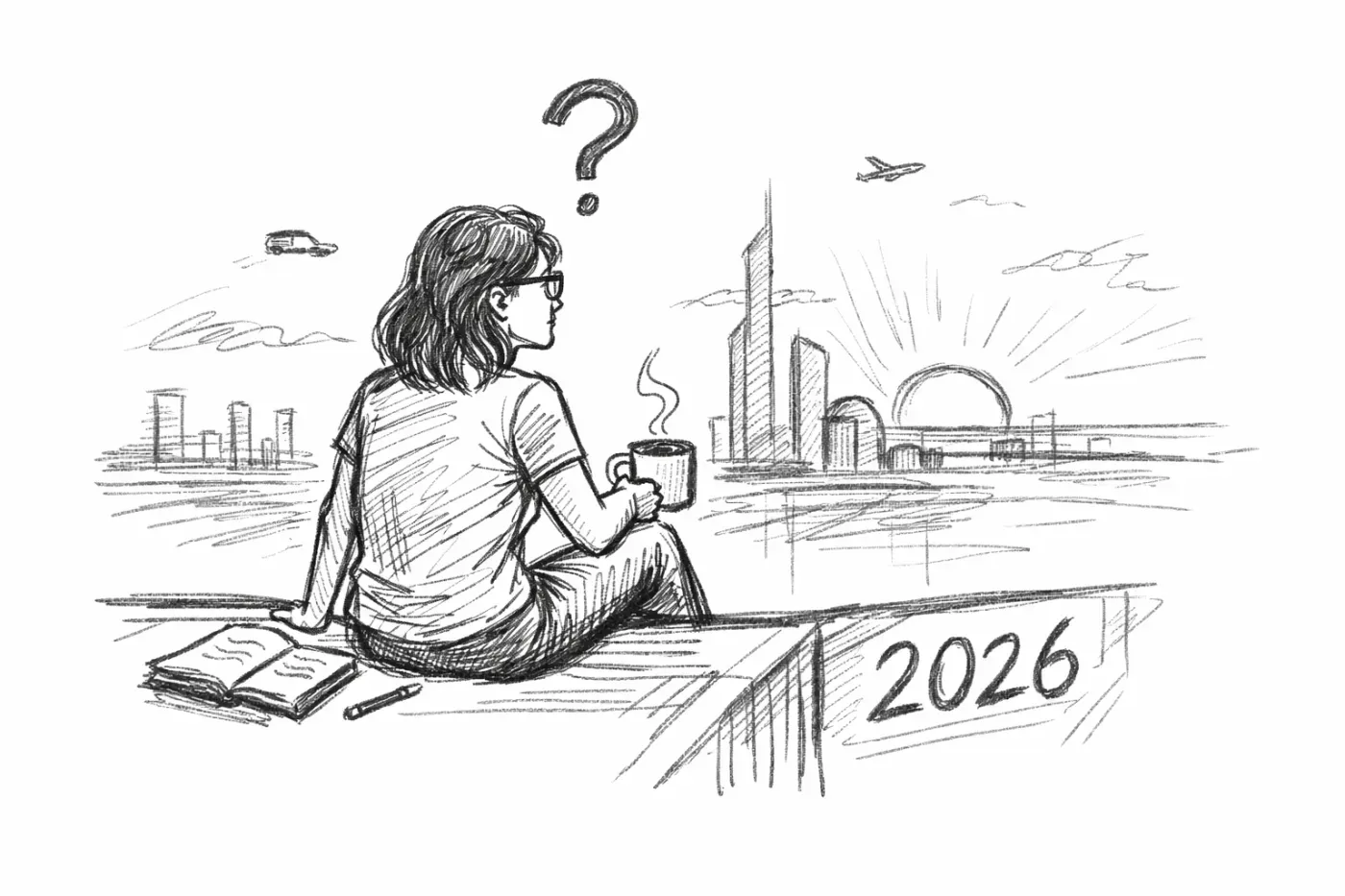
It’s 2026.
I’ve started asking inconvenient questions again.
That’s usually how something useful begins.
Let’s call it an awakening and move on.
……
Ever notice how life can be perfectly fine and still feel off?
Bills paid. Work is steady. Health is okay. Nothing’s on fire.
And yet—there’s a low-grade restlessness you can’t name.
It’s not drama. It’s not dissatisfaction.
It’s the absence of ownership.
Most people are busy maintaining a life designed by default.
Job. Routine. Obligations. Repeat.
What’s missing is something that answers a simple question:
💡What do you have that exists because you decided it should?
Not something assigned.
Not something inherited.
Not something that disappears if a company restructures or a client leaves.
Something that’s yours.
Ownership Changes How You Stand in the World
Having something of your own isn’t about ego or passion or “finding your purpose.”
It’s practical.
When you own something—even small—you stop feeling like a passenger.
It could be:
- A side business
- A niche website
- A skill you’ve monetised
- A system you built that works without you hovering
- A body of work with your name on it
The specifics don’t matter. The leverage does.
Ownership creates optionality.
Optionality creates calm.
When the news gets loud, markets wobble, or plans fall apart, people with ownership don’t panic first. They assess.
Not because they’re fearless—
but because they’re not entirely dependent.
The Real Fear Isn’t Risk. It’s Permission.
Most people don’t fail to build something.
They never start because they’re waiting to be allowed.
Allowed by:
- Timing
- Confidence
- Credentials
- Money
- The Government
- Someone senior saying “yes, go ahead”
That moment doesn’t arrive.
No one taps you on the shoulder and says:
“You’re cleared to build something meaningful now.”
If you’re waiting for permission, you’re opting out by default.
Quietly. Comfortably. Permanently.
This Isn’t About Hustle. It’s About Fewer Decisions.
Building something of your own doesn’t require intensity.
It requires subtraction.
Strategy 1: Make Fewer Commitments—On Purpose
Most overwhelm comes from saying yes too often.
Not to important things—but to available things.
If everything is a priority, nothing compounds.
Fewer commitments force better ones.
Ask:
- What actually moves me forward?
- What am I maintaining out of habit?
- What would break if I stopped—and what wouldn’t?
Cut aggressively.
Not forever. Just long enough to build momentum elsewhere.
Strategy 2: Track What You’re Actually Saying Yes To
If you don’t track commitments, you don’t control them.
Write them down:
- Ongoing obligations
- Time leaks
- “Temporary” responsibilities that never end
Seeing them listed removes the illusion that you’re just busy “for now.”
You’re busy by design—or by neglect.
Strategy 3: Replace Motivation With Process
Motivation is unreliable. Processes aren’t.
If something matters, it needs a system:
- A weekly block
- A repeatable checklist
- A minimum standard that counts as “done”
Not a big plan.
A small machine.
If it can’t survive a low-energy week, it’s not real yet.
Strategy 4: Act Before You’re Ready (Because You Won’t Be)
Clarity comes after movement, not before.
The first version will be average.
That’s fine. Average is functional.
You’re not trying to impress anyone.
You’re trying to own something.
Start small. Start quietly. Start now.
The Point Isn’t Independence. It’s Stability.
This isn’t about quitting jobs or escaping systems.
It’s about not having your entire sense of safety tied to one thing you don’t control.
When you own something—even modest—you stand differently.
You’re calmer.
More selective.
Less reactive.
Not because life is perfect.
But because something exists that wouldn’t if you hadn’t built it.
And that changes everything.
…
Back to the drawing board. No more notes. Just moves.
Thoughts, comments and radical ideas about this post? Email me.